
Start a Cherokee County Search
The best starting point depends on the fact already in hand. A full name can lead to the deed index, court party index, business filings, or professional licenses. A current street address works better in the assessor and GIS tools. An old address may require a deed chain, tax digest, census, newspaper, or a verified dated directory. For a deceased relative, probate estates and recorded transfers can identify heirs, while vital certificates and obituaries can confirm family ties.
Keep each record's role clear. A deed names parties to a transfer. The tax roll identifies the assessed owner and may show a mailing address that differs from the physical, or situs, address. A permit applicant may not be the occupant. Court indexes are finding aids, not the complete files. Comparing two independent sources prevents a shared name or stale address from becoming a false match.
- Write down the exact name, date range, address, or record number already known.
- Choose the custodian whose records answer the question, such as the clerk for deeds or the assessor for parcel ownership.
- Search spelling variants and record each document, book, page, parcel, or case identifier.
- Check the result against a second source, especially when names repeat.
- Ask the office, archive, or library for older or restricted-index material that the web portal does not show.
Cherokee County Search Offices
No single database holds every Cherokee County name. The Clerk of Superior Court maintains deeds, liens, plats, trade names, and Superior, State, and Magistrate filings. Probate Court separately keeps estates, wills, guardianships, and marriage licenses. The Tax Assessor maintains ownership and parcel indexing, while Georgia DPH handles state vital certificates. Detailed fees, copy choices, and request rules belong with Cherokee County public records access.
Clerk of Superior Court
90 North Street, Suite G-170
Canton, GA 30114
678-493-6538
Cherokee Probate Court
90 North Street, Suite 340
Canton, GA 30114
678-493-6160
Cherokee Tax Assessor
2782 Marietta Highway, Suite 200
Canton, GA 30114
678-493-6120
Search Cherokee County Deeds
Landmark Web is the county's strongest name-based property trail. Its online index covers 1989 forward. The site points older index work to OnPoint, while the statewide GSCCCA real-estate index begins in 1999. Those dates mark online coverage, not the start of Cherokee County deeds. Earlier books may still survive through the clerk, courthouse indexes, Georgia Archives microfilm, or FamilySearch images.
Search a buyer as the grantee, the person receiving an interest, and a seller as the grantor, the person conveying it. Save the instrument type, recording date, book and page, and legal description. Then repeat backward through each prior grantor. Search spelling variants because handwritten or keyed indexes may differ.
| Search field | Use | Practical note |
|---|---|---|
| Grantor | Seller or conveying party | Useful for outgoing transfers and liens |
| Grantee | Buyer or receiving party | Useful for acquisition and chain of title |
| Book and page | Recorded location | Best for ordering a known copy |
| Legal description | Land lot, district, plat, lot | Links a deed to the correct parcel |
The official Landmark entry screen shows the county's deed access point.
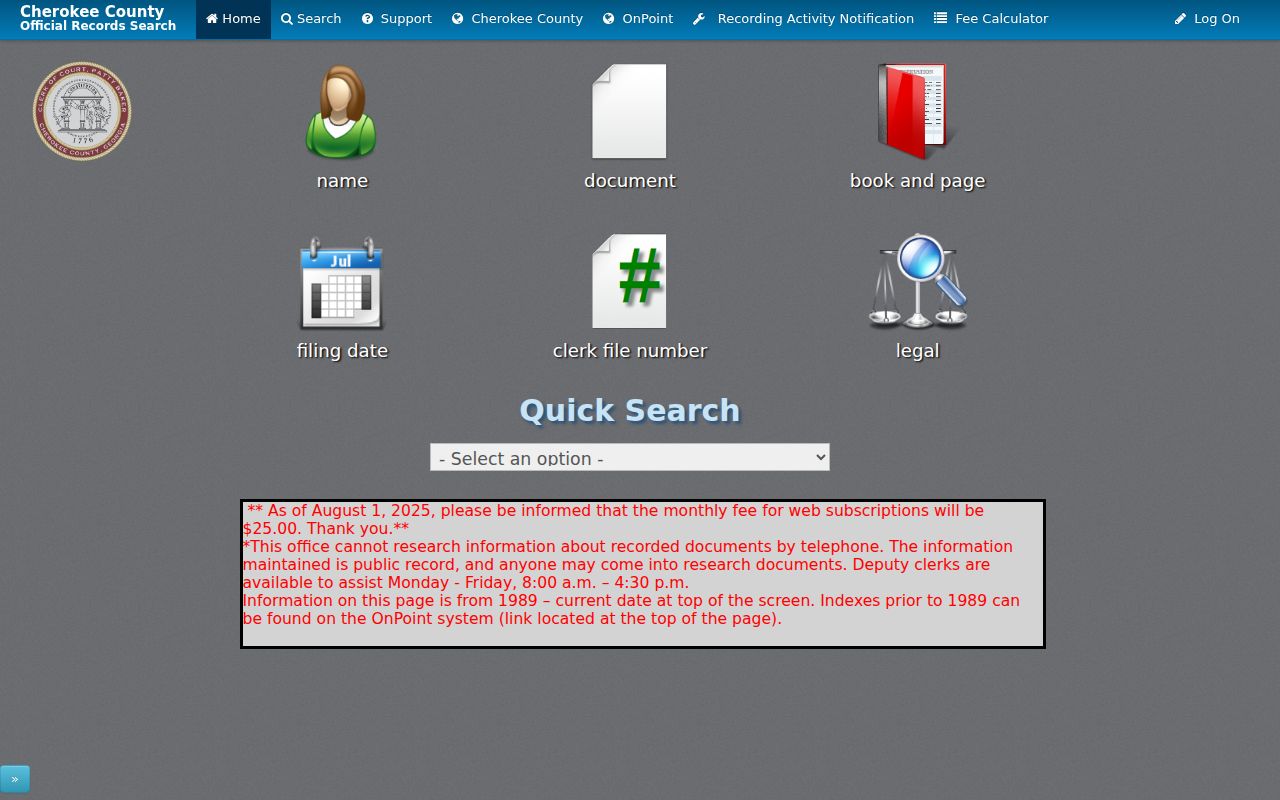
Its coverage notice helps a researcher decide when to move from the web index to older courthouse and archive channels.
Trace Cherokee County Parcels
The assessor, GIS, deed index, and CityView answer separate questions. Start at the Tax Assessor Real Estate Search for the current assessment roll. Copy the parcel identifier, exact owner spelling, situs address, mailing address, and legal description when displayed. A mailing address is where tax mail goes; a situs address is the physical parcel. They can differ.
County GIS can search an address, TIN, PIN, or cross street. If address autocomplete fails, official GIS help suggests the global search, a nearby intersection, or the parcel identifier. CityView's property locator accepts a property address or parcel number, but it is a development and code locator, not the assessor's owner-name roll.
The Cherokee Tax Assessor page provides the public entry to its property products.
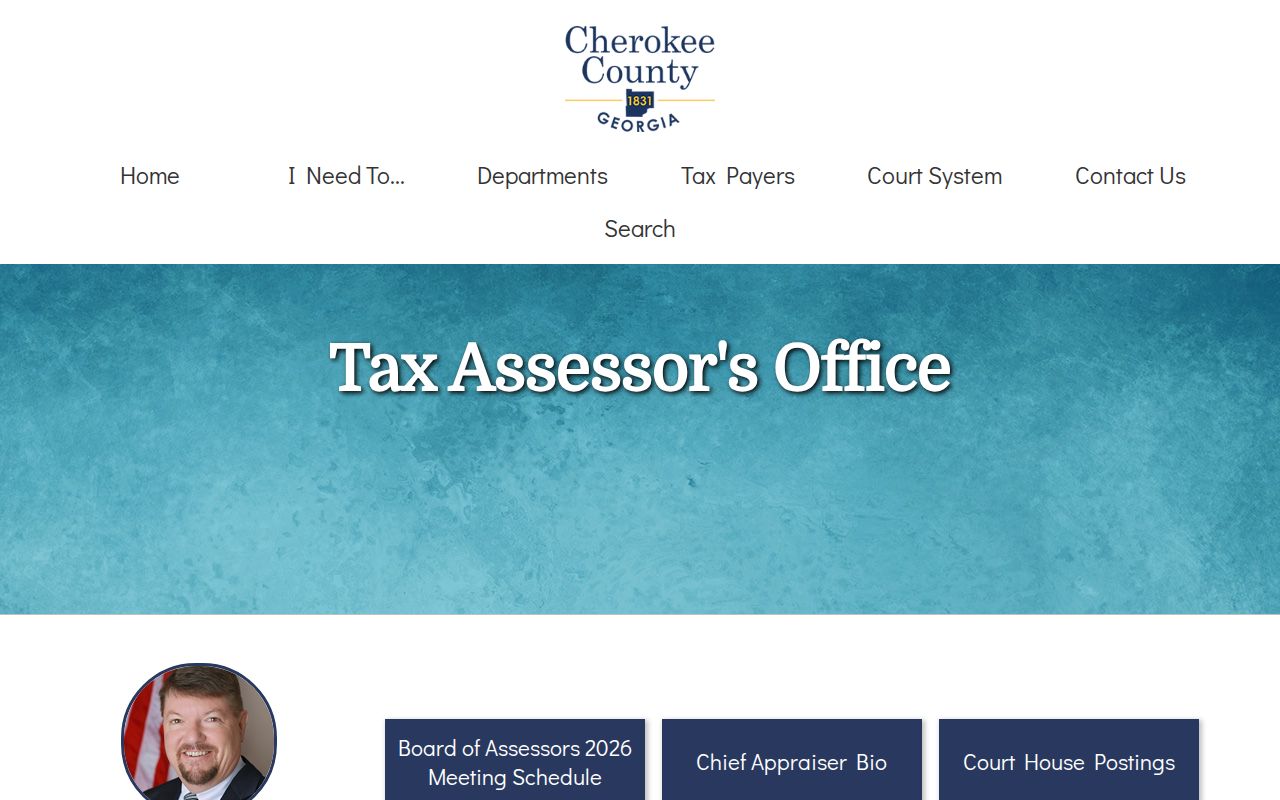
Use the assessor result as a starting point, then confirm ownership through the recorded deed.
Check Cherokee County Court Names
The Clerk of Courts records Superior, State, and Magistrate matters, while Probate and municipal courts keep their own case types. Georgia's E-Access court directory routes Cherokee Superior and State searches to account-based re:SearchGA. A docket is the case event list and filing index. It can identify parties, case number, court, filing dates, and disposition entries, but it is not the whole case file.
Use the case number to request the actual public file or copy from the clerk. Sealed matters, juvenile cases, protected filings, and some family details will not appear or may be redacted. Counter and mail requests remain important when the portal is incomplete or a certified copy is needed.
| Court | Covers | Name Search | Access |
|---|---|---|---|
| Superior and State | Civil and criminal filings | re:SearchGA route | Account portal, clerk counter, mail copy |
| Magistrate | Claims and warrants within its jurisdiction | County clerk route | Clerk file or copy request |
| Probate | Estates, wills, guardianships | Probate Court | Public portions at the office |
Read Cherokee Court Routes
The Georgia Courts E-Access page shows that court access is routed by county and court, not through one universal statewide name database.
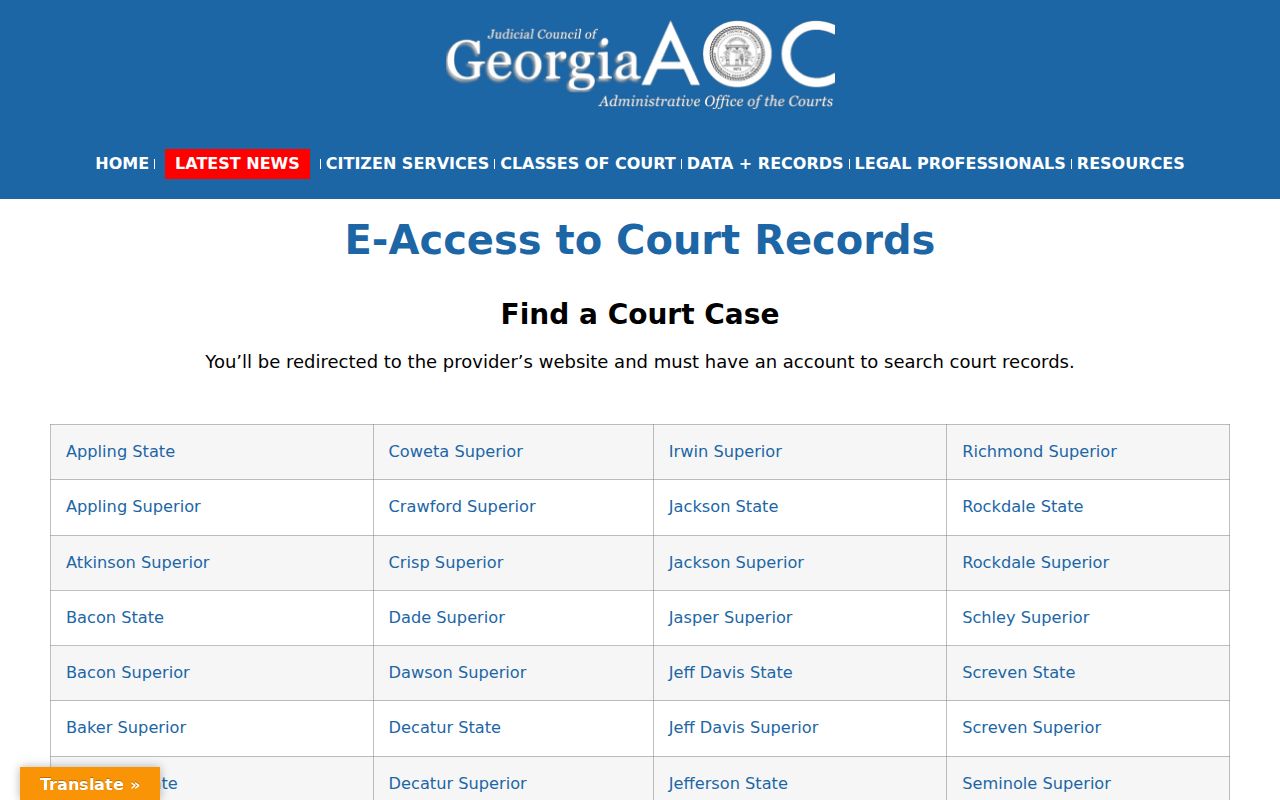
That routing step matters because a probate estate, municipal citation, and Superior Court civil case have different custodians.
Order Cherokee County Vital Records
Cherokee Probate Court issues local marriage records. Georgia DPH holds Georgia birth and death certificates, marriage records for 1952 through 1996, and divorce verifications, while the Cherokee Superior Court keeps the divorce file itself. Certified birth and death records require eligible applicants, identification, and a direct and tangible interest under Georgia law. They are not open name directories.
Historical work follows different routes. Death certificates more than 75 years old are available through the Georgia Archives Virtual Vault. Archives county cards, digitized microfilm, FamilySearch catalog images, newspapers, and probate records can bridge older gaps. Georgia does not publish a blanket rule opening birth certificates after a set number of years, so researchers should not assume one.
The Georgia DPH request page lays out the official certificate channels.
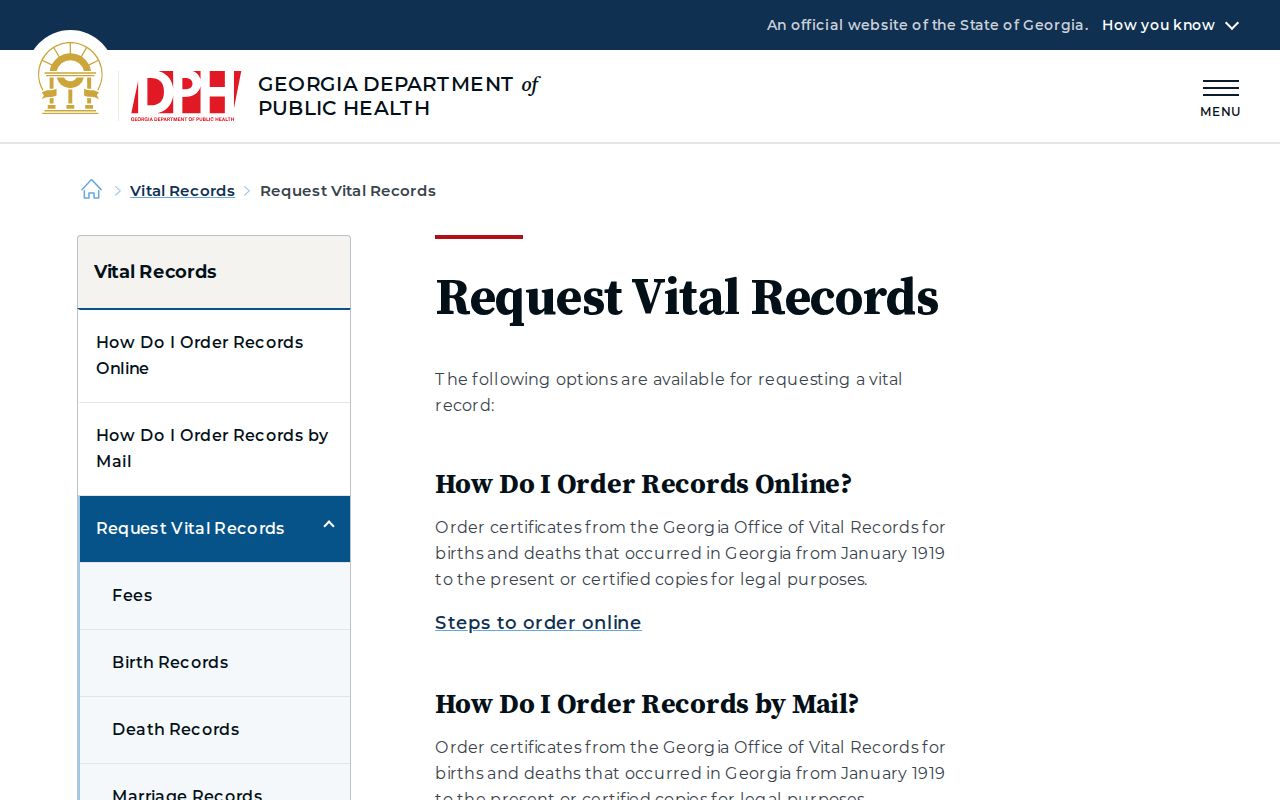
Use it for eligible certificate orders, then use the court or archive when the needed record falls outside DPH's role.
Browse Cherokee County Archives
History Cherokee preserves more than 100,000 documents, photographs, oral histories, maps, artifacts, family histories, and objects. Named collections include Canton Cotton Mills, William “Buddy” Alexander, maps, archaeology, historic resources, and photography. Its research library works by appointment. Sending a surname, date span, community, and desired record type before a visit helps staff target the search.
The Georgia Archives adds county microfilm cards, tax digests, deed books, probate material, historic newspapers, land-lottery records, and the Virtual Vault. Many FamilySearch county images must be browsed page by page through a handwritten book index rather than searched by name. The Georgia Archives research entry shows the available statewide routes.
Start with the Archives county-record card index and select Cherokee. Each card points toward cataloged books or film, and the disaster note does not mean every volume was lost. Digitized county microfilm can include tax digests, Superior Court deed books, and records of the Inferior Court or Ordinary, the predecessor roles associated with later probate work. The Virtual Vault needs no public login for searching. Archives staff do not provide distance research or routine copy service, so plan an on-site visit, request up to five boxes in advance when allowed, or hire a researcher if the useful item is not online.
Sequoyah Regional Library and History Cherokee fill a different role. Reference staff can confirm whether a branch currently holds a particular county history, yearbook, telephone book, newspaper run, or database. No official shelf list of local city and reverse-directory years was found, so ask by title, community, and date rather than assuming a collection exists. For genealogy, combine a directory entry with a census, deed, probate paper, obituary, or tax digest before treating two matching names as the same person.
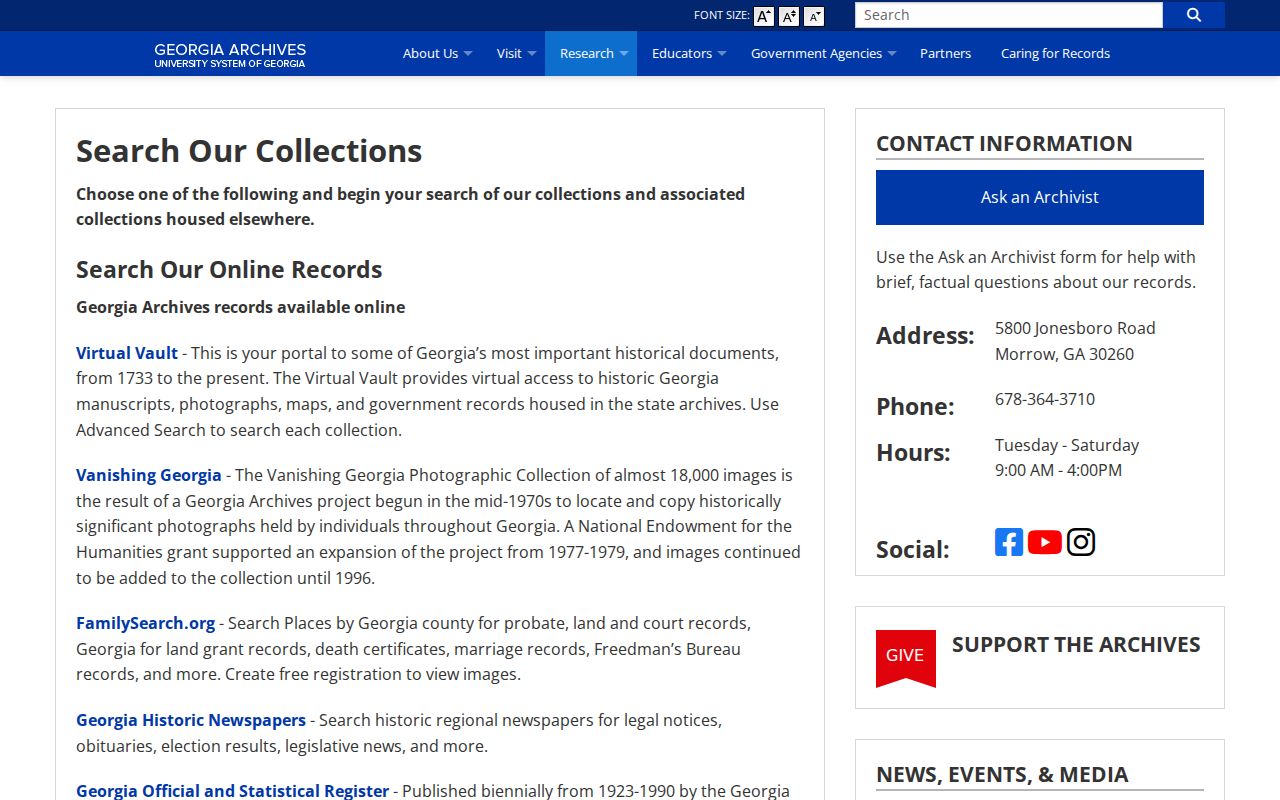
Archive catalogs are especially useful when modern indexes stop or a name belongs to an early land district.
Handle Cherokee County History Carefully
Modern boundaries can mislead a historical search. Cherokee County began in 1831 with about 6,900 square miles and land later divided among 24 counties. An early record labeled Cherokee may refer to land outside today's boundary. Establish the land lot and district, then follow the successor county's deeds, taxes, and probate files.
The county also documents that its 1840 courthouse burned in 1928. No official series-by-series loss inventory was found. Do not assume a particular deed, marriage, probate, or court volume vanished solely because of the fire. Check clerk inventories, Georgia Archives cards and microfilm, later deed recitals, surviving books, newspapers, and FamilySearch images before declaring a gap.
- Index
- A finding aid that points to a document or image.
- Docket
- The event and filing list for a court case.
- Grantor and grantee
- The party conveying an interest and the party receiving it.
- Certified copy
- An official copy authenticated by the record custodian.
Verify Cherokee Business Names
The Georgia Corporations Business Search can search a business name, control number, registered agent, officer, or designated agent. Search a person separately in the officer and registered-agent roles because the same name may appear differently. Results identify the entity information of record, not a home address or proof of current residence.
Professional credentials are split among the SOS license portal, Georgia Medical Board, State Bar, and other boards. The SOS verifier accepts profession, license type, name, or license number and may show status, issue and expiration dates, associated licenses, and public orders. County CityView adds local occupation-license and permit records for unincorporated Cherokee, with address and parcel context.
| Official source | Best use | Limit |
|---|---|---|
| Business Search | Entity, agent, officer roles | Business data is not residence proof |
| License Verification | Credential status and board records | Boards use separate systems |
| CityView | County permits and occupation licenses | Primarily unincorporated jurisdiction |
Check Cherokee Custody Records
The Cherokee Sheriff is the local source for detention information, while the Georgia Department of Corrections covers state custody and the federal Bureau of Prisons has its own locator. A booking entry or custody page is not a final case outcome. Charges may change or be dismissed, and a court docket or file is the better source for disposition.
The GBI registry gateway is a statutory public-safety source, not a general criminal-history search.
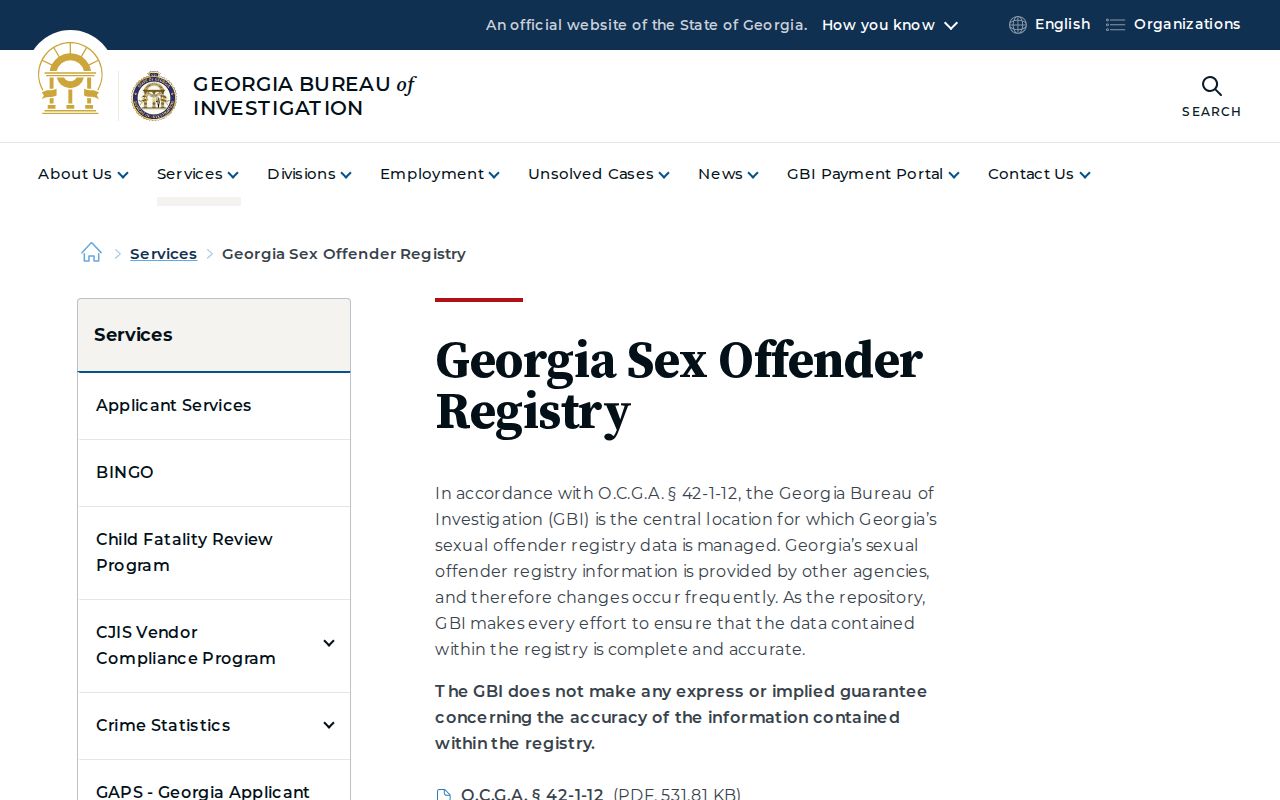
Follow the registry's warnings, verify current information, and never use published details to threaten or harass anyone.
Protect Cherokee County Addresses
Georgia Safe at Home launched July 1, 2026. It offers eligible survivors a substitute address for most state and local public records, First-Class Mail forwarding, and protected voter registration. VoteSafe is narrower and protects the residence address within the voter system for qualifying voters. A move to another county requires a new VoteSafe application.
A commercial directory opt-out does not erase the lawful deed, tax, court, licensing, or business source. Sensitive-address work should begin with the official protection program that fits the risk. The separate Cherokee County voter records page explains what the voter list publishes and withholds.
Request Missing Cherokee County Records
When no dedicated index answers the question, Georgia's Open Records Act provides a route to an existing county record. Send the request to the office that actually keeps it. Cherokee County's NextRequest portal can start and track a general county request, while constitutional offices and municipalities may have their own custodians. Describe the department, record type, date range, names, and any case, parcel, license, or document number. Ask for an electronic copy or inspection when either will meet the need.
The agency must produce the record or give the required response within three business days, including a timetable and legal basis when material is withheld. The law requires access to existing records. It does not require staff to create a new report, answer research questions, or combine facts from several databases. Public portions may be released after exempt details are redacted.
Cherokee County gives the first 15 minutes of administrative time free. Later labor uses the lowest-paid full-time employee able to perform the work, paper copies cost 10 cents per page, and a request expected to exceed $25 receives an estimate. Save the request, acknowledgment, estimate, dates, and any cited exemption. A focused request is usually faster and less costly than asking for every file that mentions a common surname.
Use Cherokee Voter Records Lawfully
Georgia My Voter Page is an authenticated personal lookup for registration status, polling place, districts, early-voting locations, and sample ballots. It is not an open search for any person's name. A failed match may reflect spelling, county, or registration details, so the county registrar is the fallback. Georgia also sells voter lists, including a Cherokee County file, but the public and confidential fields are sharply divided.
The elector list can include a voter's name, birth year, status, residence and mailing components, precincts, districts, registration dates, and participation metadata. It does not disclose ballot choices. Original applications, month and day of birth, Social Security numbers, driver's-license numbers, email addresses, application locations, and protected addresses stay confidential. Georgia voters do not register by party; a “Last Party Voted” field refers to the ballot type selected in the most recent primary.
State law forbids commercial use of the elector list. For the complete lookup fields, list price, ordering steps, status rules, and protected-address options, use the Cherokee County voter-record resource linked in the address-protection section.
Compare Cherokee Search Sources
Official records and commercial people-finder results serve different roles. A government index identifies what an office recorded and provides a document, case, parcel, license, or registration trail that can be checked with the custodian. A commercial product may gather several sources into one result, but its match logic, refresh cycle, and source dates may not be visible. Convenience does not turn an aggregate result into an official record.
| Source type | Strength | Best next step |
|---|---|---|
| County or state index | Named custodian and record identifiers | Open or order the underlying record |
| Archive or library collection | Historical context, photos, directories, newspapers | Check catalog scope and original citation |
| Commercial compilation | May offer a quick starting lead | Verify every fact at the lawful source |
Official indexes have limits too. An index may omit sealed files, stop at a coverage date, lag behind a recent filing, or show a party without proving residence. The sound approach is source-aware: note what the record actually establishes, retain its identifier, and cross-check the person through another independent trail.
Read Cherokee County Growth Data
The Census Bureau estimated 299,273 residents in 2025, up from 266,620 in the 2020 census. Growth changes the practical search trail. New subdivisions create parcel, permit, tax, school, and address records, while older families may appear under rural communities, road names, land lots, mills, or railroad-era institutions rather than current street labels.
Cherokee County's key municipalities include Canton, Woodstock, Ball Ground, Holly Springs, and Waleska, plus partial areas of Mountain Park and Nelson and broad unincorporated territory. ZIP codes are mail-delivery geography, not proof of a city boundary. Before searching a permit, code case, occupation license, police report, or municipal court file, use the parcel and GIS layers to establish the government with jurisdiction. The same address can sit within county, school, fire, water, commission, and legislative districts that do not share one boundary.
The Cherokee County QuickFacts profile provides current context.
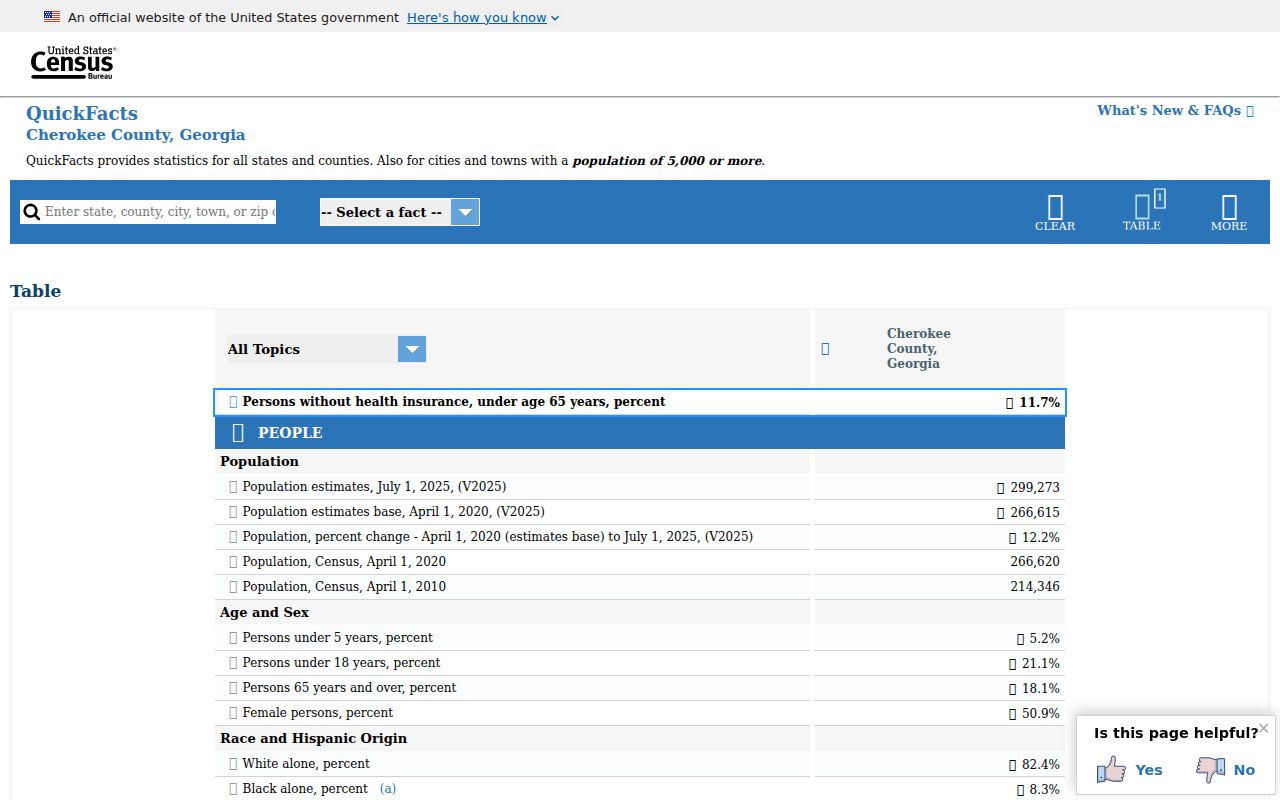
Population figures do not identify a person, but they explain why modern and historical Cherokee County searches often require different record systems.